
Fall Home Maintenance Checklist for Orange County Homes
After a long, dry season, this fall home maintenance checklist can help Orange County and Southern Los Angeles homes. It helps them get ahead of the first real storm. That is when gutters overflow, roof drains clog, and yard drainage gets tested.
In Southern California, most of the year’s rain falls in the cooler months. The National Weather Service publishes climate normals for Downtown Los Angeles (1991–2020). They show an average of 14.25 inches of rain a year. The wettest stretch typically runs from November through March. February is the wettest month, at 3.64 inches. Winters are mild — January’s average high is 68 degrees in those normals — and Orange County follows the same seasonal pattern.
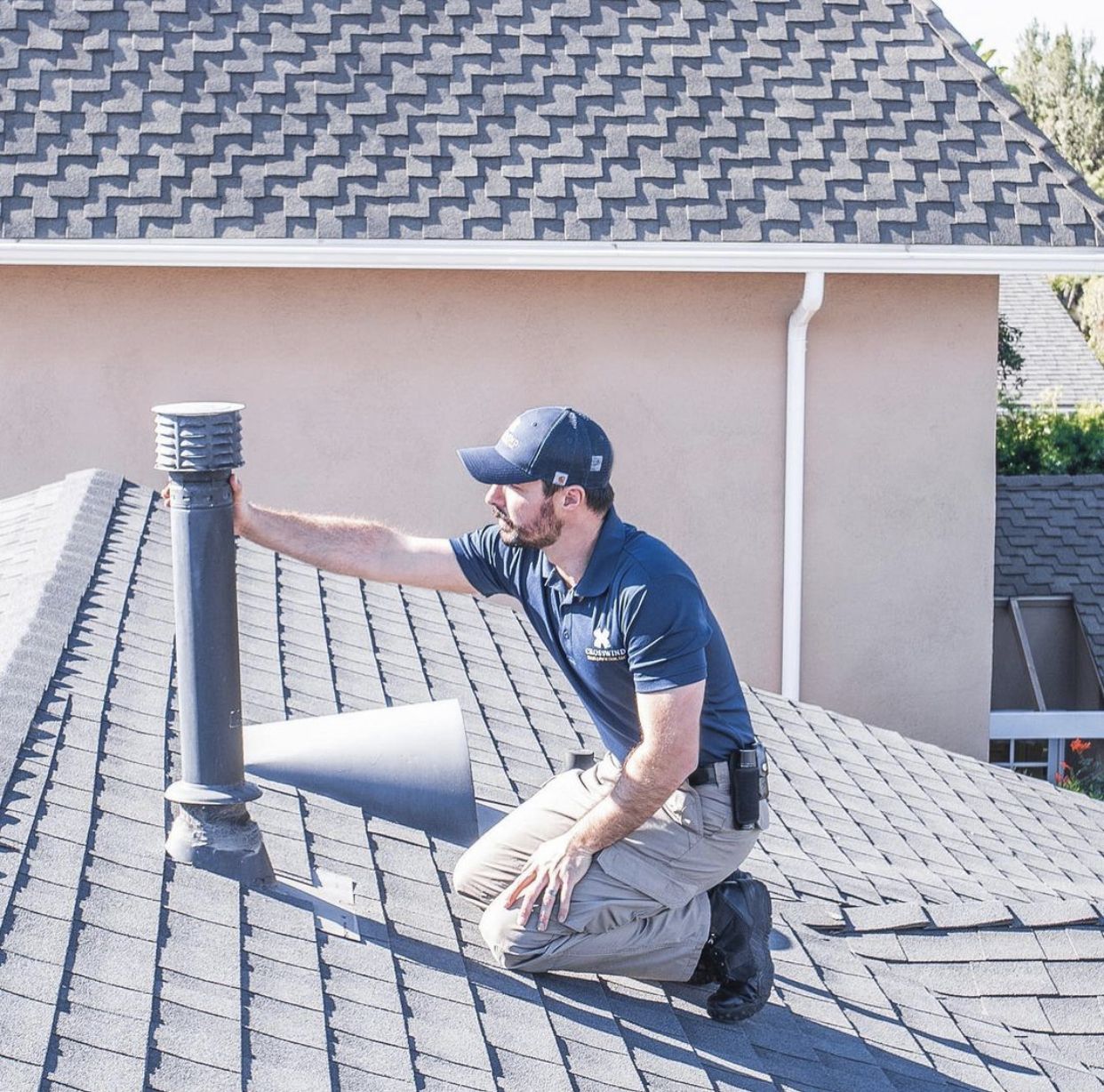
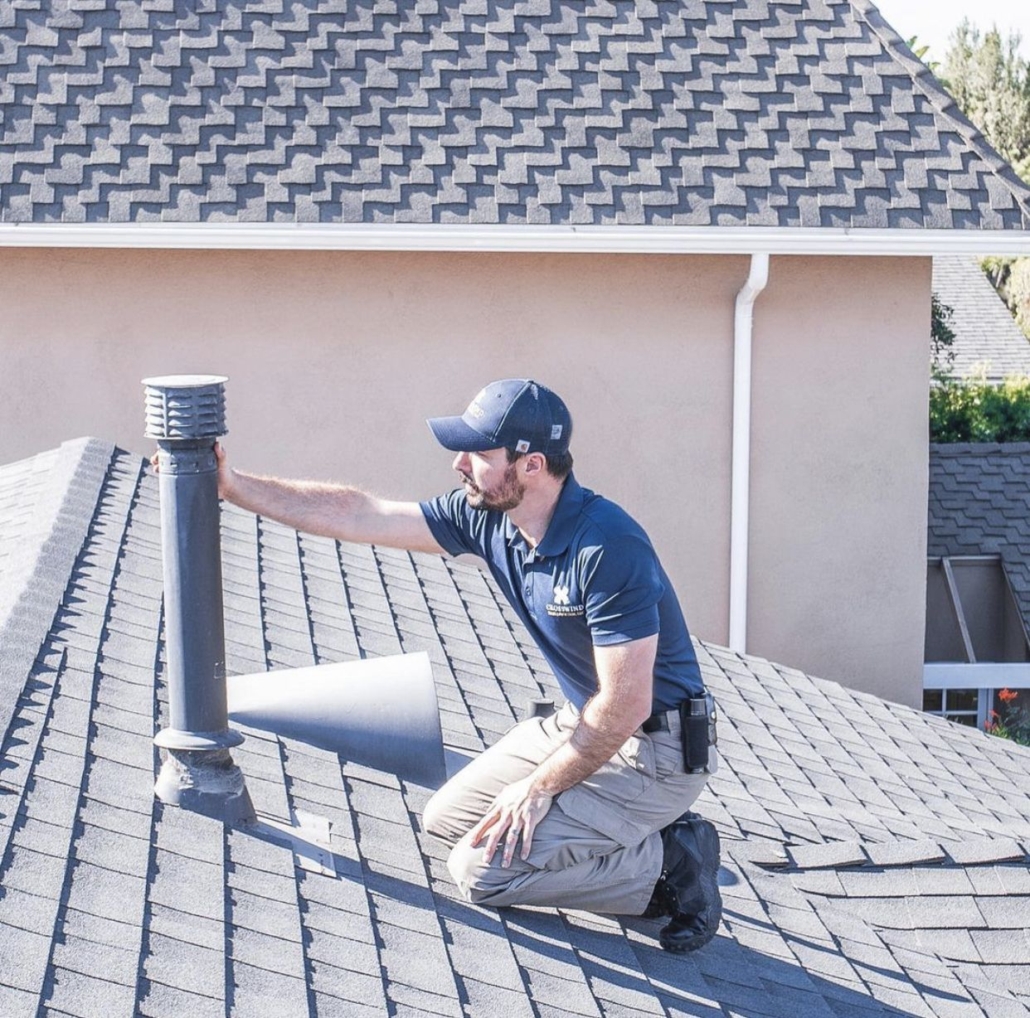
A fall roof check should include vent pipes, flashing, and gutters. Work from a safe vantage point, or use a licensed professional on steep roofs. Photo: Crosswind Home Inspection.
What this fall home maintenance checklist covers
Here is a practical list to work through before the rain arrives.
Clear gutters and downspouts before the rain
Leaves, seed pods, and roof grit can sit in gutters all summer. They can then send water over the fascia in the first downpour. Flush downspouts and confirm that water discharges several feet away from the foundation. Do not let it empty into a planter tight against the house. If you have a low-slope or flat roof, clear scuppers, strainers, and overflow drains as well.
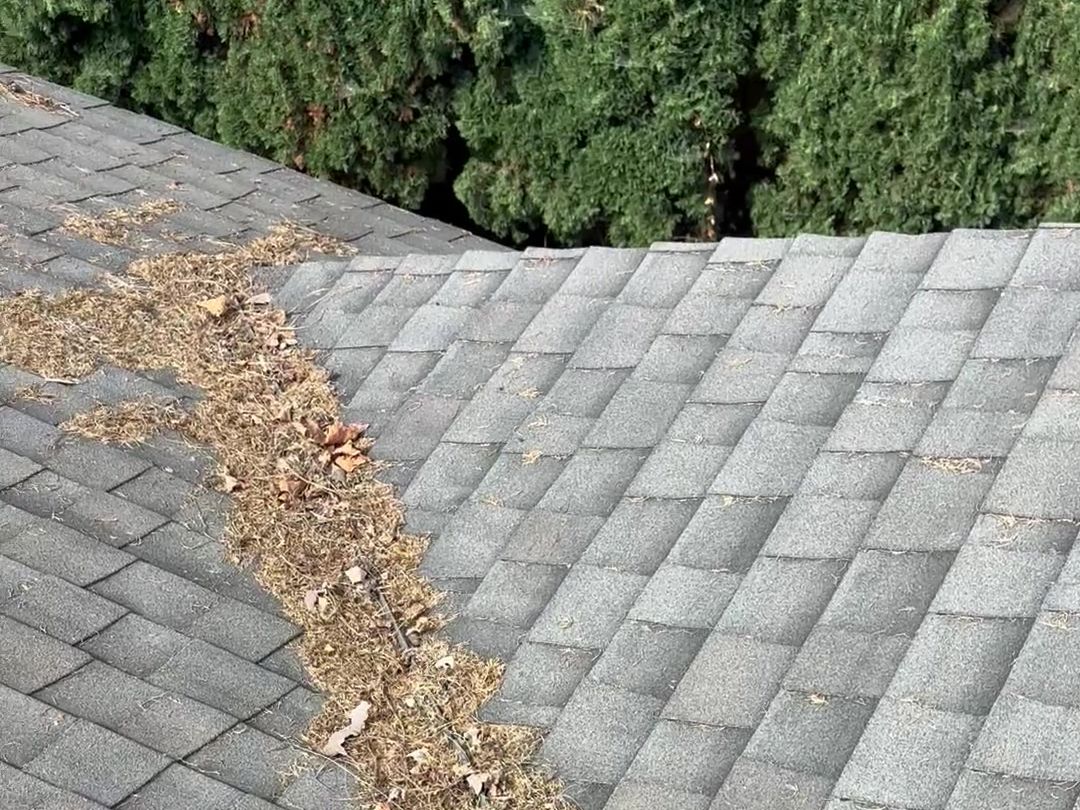
Roof valleys collect leaves and grit over a dry summer. Clearing that debris before the first storm helps water reach the gutters and drains. Photo: Crosswind Home Inspection.
CAL FIRE also recommends removing dead leaves and debris from gutters as part of defensible space. This step helps in fire season and rainy season alike. Work from the ground when you can, and leave steep roofs to a licensed professional.
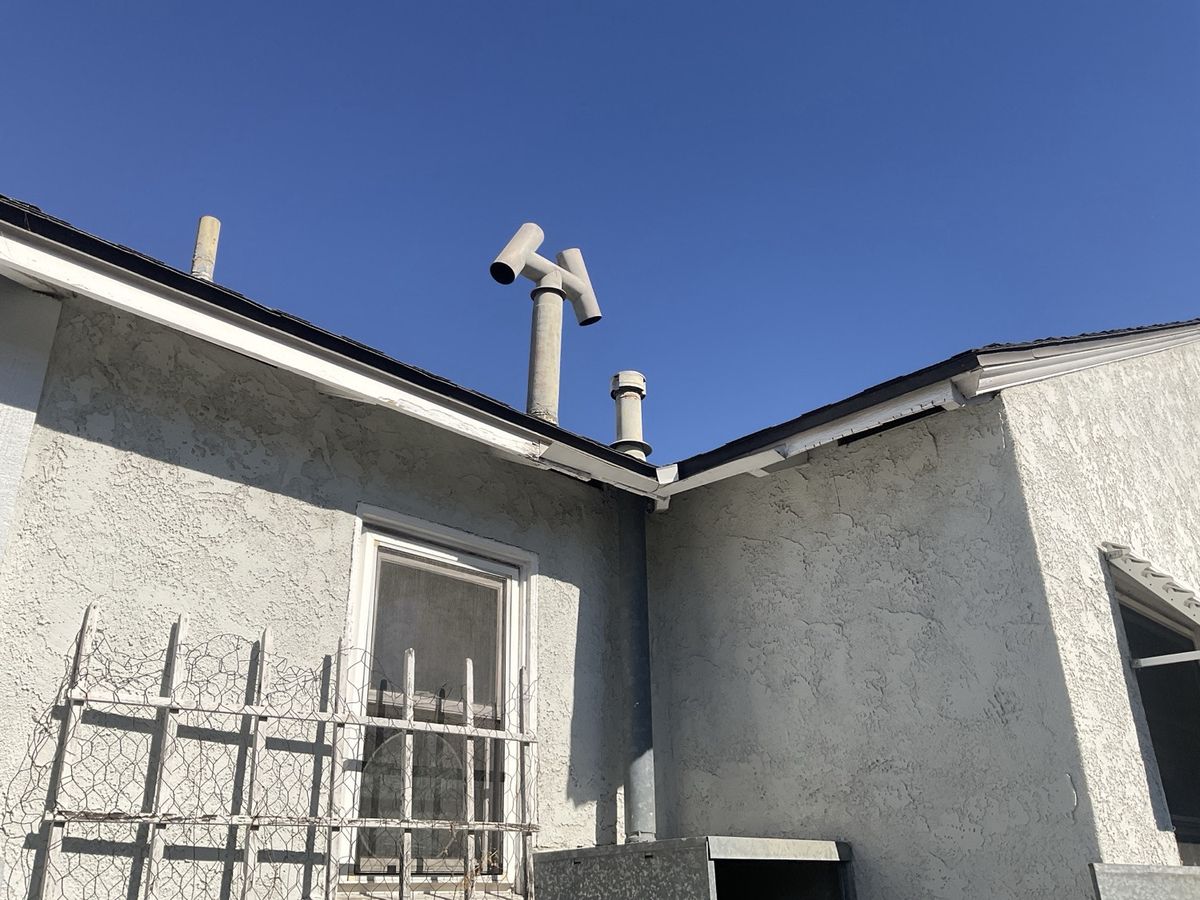
Gutters, downspouts, fascia, and roof vents are worth a look from the ground before the rainy season. Photo: Crosswind Home Inspection.
Check the roof from a safe vantage point
From the ground or with binoculars, look for slipped, cracked, or missing shingles or tiles. Also look for rusted flashing around vents and chimneys, and for stained or peeling fascia. On a flat roof, ponding or a clogged drain is often the first clue. Do not walk a steep or wet roof.
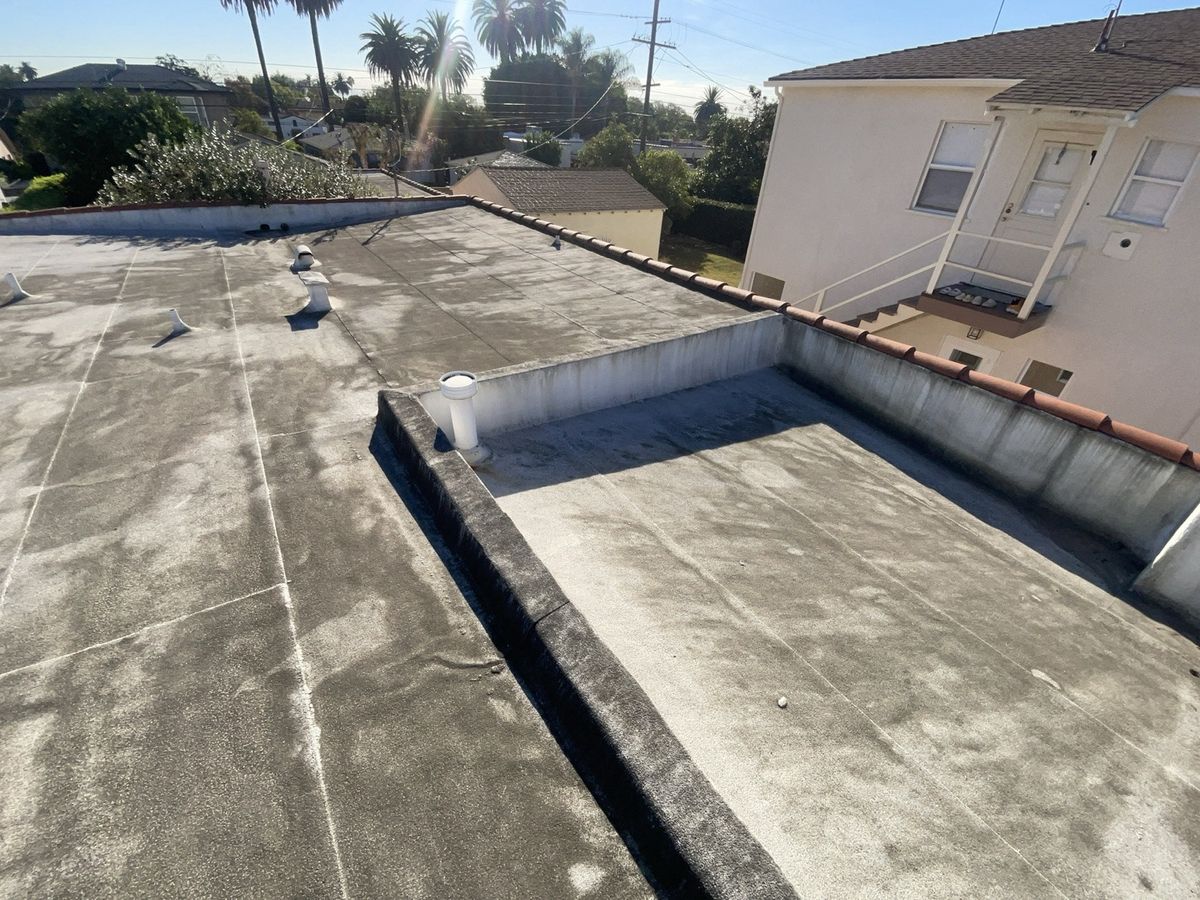
On a flat or low-slope roof, ponding and clogged drains are often the first clues. They can show that water is not getting off the roof. Photo: Crosswind Home Inspection.
If you see damage, contact a licensed roofing contractor. After a storm, we have also written about roof inspections after wet weather.
Look at grading and drainage on a fall house maintenance checklist
Walk the perimeter and see where water would go in a heavy rain. Soil, bark, and hardscape should slope away from the house. Mulch or soil should sit below a stucco weep screed so the wall can drain. Clear yard drains, and make sure downspouts are not dumping against the slab or a garage threshold.
Want more coastal storm-prep detail? We have also written about preparing coastal Orange County and Long Beach homes for wet weather.
Weatherstrip doors and windows
The Department of Energy recommends sealing windows and doors before the heating season. Caulk stationary gaps around frames. Add weatherstripping to movable parts such as doors and operable windows. Even in a mild winter, those gaps waste energy and let in drafts and wind-driven rain. Replace weatherstripping that is cracked or flattened and no longer seals.
Test smoke and carbon monoxide alarms
The U.S. Fire Administration recommends smoke alarms inside and outside each bedroom and on every level of the home. Test them every month. Replace disposable batteries at least once a year, unless the alarm has a sealed 10-year battery. Replace the alarm 10 years after the manufacture date.
CPSC recommends carbon monoxide alarms that meet the UL 2034 standard on every level and outside sleeping areas. California law also requires a State Fire Marshal-approved carbon monoxide device (Health and Safety Code section 17926). The requirement applies to dwellings with a fossil-fuel appliance, a fireplace, or an attached garage. Testing those alarms belongs on this fall home maintenance checklist.
Give the water heater a look on this fall home maintenance checklist
The Department of Energy recommends setting a water heater to the warm setting, 120°F. This can save energy and reduce scalding risk. Look for leaks at the tank, connections, or the drain pan, and keep the area around the heater clear.
California law also requires water heaters to be braced, anchored, or strapped. They must resist falling or horizontal displacement due to earthquake motion (Health and Safety Code section 19211). At a minimum, they must be secured in accordance with the California Plumbing Code, or any local modifications to it.
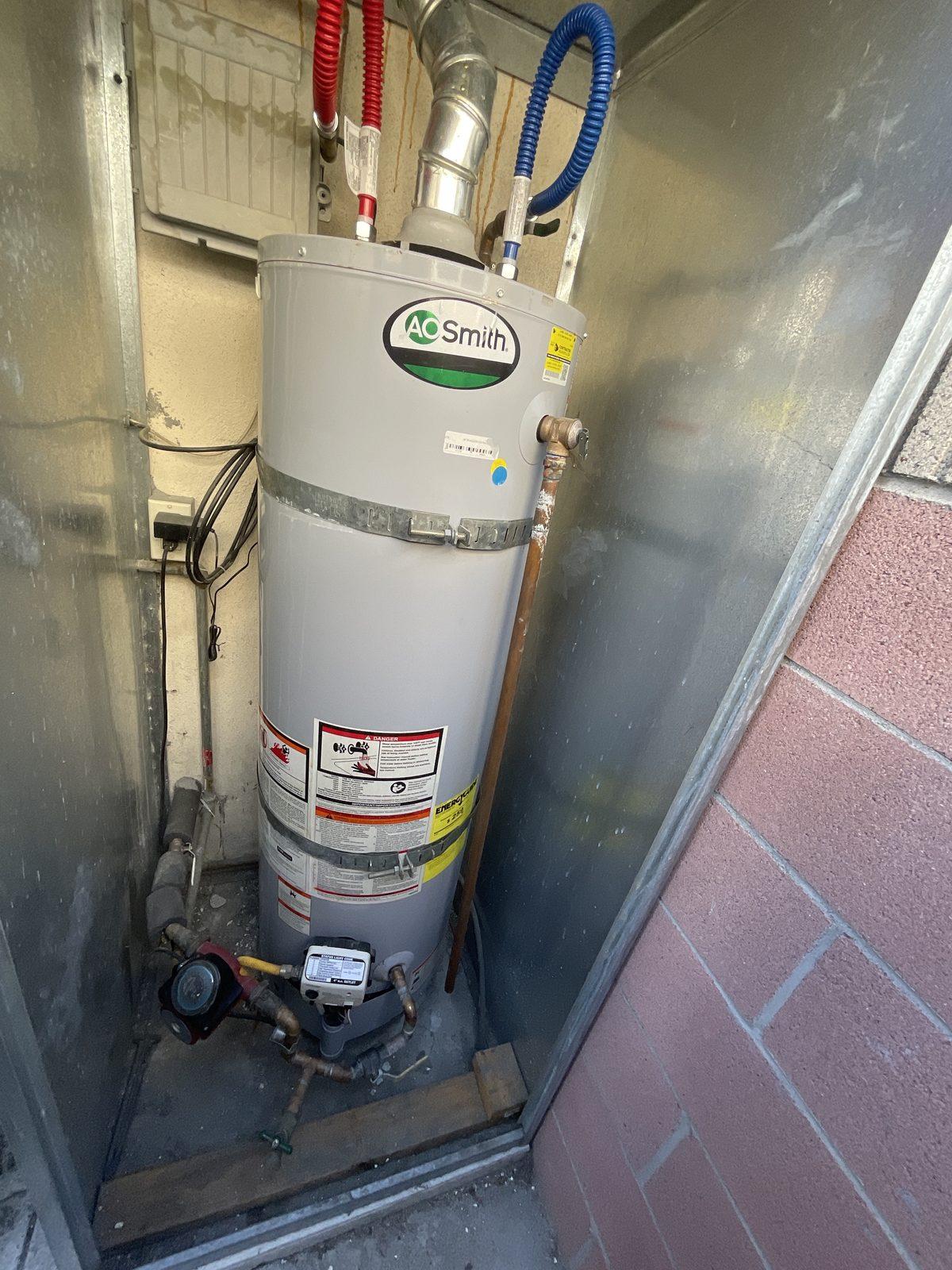
A fall look at the water heater can catch leaks at the tank, connections, or drain pan. It is also a chance to confirm the tank is braced, anchored, or strapped. Leave gas and TPR-valve work to a licensed plumber or HVAC technician. Photo: Crosswind Home Inspection.
Leave gas connections, flushing, and temperature-and-pressure relief valve work to a licensed plumber or HVAC technician.
Adjust the irrigation schedule
If the sprinklers are still on a summer schedule, they may run through the first storms. EPA’s WaterSense program says irrigation schedules should be adjusted with the seasons. In fall or winter, even weekly watering can waste water in some areas. A rain sensor or a WaterSense-labeled controller can help the system skip watering when it is already wet. Check any local watering rules at the same time.
Trim vegetation and keep defensible space in mind
Fall is a good time to trim plants that have grown into the roof, siding, or a chimney. CAL FIRE’s defensible-space guidance calls for 100 feet of defensible space around a home. Public Resources Code section 4291 requires this, or clearance to the property line if that is closer. The agency also emphasizes the first five feet around the structure. Keep that area clear of dead plants, leaves, and combustible mulch. Use hardscape such as gravel or pavers where you can. Keep branches at least 10 feet from a chimney or stovepipe outlet. Clear debris from the roof, gutters, and under decks.
These steps matter in many Orange County neighborhoods, not only at the wildland-urban interface. They are part of this fall home maintenance checklist. Follow current CAL FIRE and local fire-agency guidance for your property.
Clean the dryer vent on your autumn home maintenance checklist
Clothes dryer fires often start when lint builds up in the filter or the vent. The U.S. Fire Administration recommends cleaning the lint filter before and after each cycle. It also recommends cleaning lint from the back of the dryer. The agency also says to check that the vent is not damaged, crushed, or restricted. The outdoor vent cover should open when the dryer is running. Have the dryer installed and serviced by a professional.
What a home inspection can add to this fall home maintenance checklist
A general home inspection is a visual, non-invasive evaluation of accessible systems. On a typical visit, we look at the roof and exterior from safe access. We also look at visible drainage, the water heater, and heating and cooling equipment. These are many of the same items on this fall home maintenance checklist. We do not clean gutters, service a furnace, or certify defensible space. If you are buying or selling, that visit can still help you see what needs attention. The same is true if you want a professional set of eyes on the house before winter.
Are you in Cypress, Orange County, or Southern Los Angeles? If you want help beyond this fall home maintenance checklist, schedule a home inspection. You can also learn more about what to expect on inspection day. You can also call or text (714) 514-9681.
Frequently asked questions
What should be on a fall home maintenance checklist?
A practical fall home maintenance checklist for Orange County and Southern Los Angeles homes covers several tasks. It includes clearing gutters and downspouts and checking the roof from a safe vantage point. It also includes looking at grading and drainage and weatherstripping doors and windows. Other items are testing smoke and carbon monoxide alarms, giving the water heater a look, and adjusting irrigation. The list also includes trimming vegetation for defensible space and cleaning the dryer vent.
When does Southern California’s rainy season typically start?
The National Weather Service publishes climate normals for Downtown Los Angeles (1991–2020). These show that most of the year’s rain falls in the cooler months. The wettest stretch typically runs from November through March. February is the wettest month in those normals, at 3.64 inches. Orange County follows the same seasonal pattern.
More questions on dryer vents and defensible space
Why does dryer vent cleaning matter?
Clothes dryer fires often start when lint builds up in the filter or the vent. The U.S. Fire Administration recommends cleaning the lint filter before and after each cycle. It also recommends cleaning lint from the back of the dryer. The agency also says to check that the vent is not damaged, crushed, or restricted. The outdoor vent cover should open when the dryer is running.
How much defensible space does CAL FIRE recommend?
CAL FIRE’s defensible-space guidance calls for 100 feet of defensible space around a home. Public Resources Code section 4291 requires this, or clearance to the property line if that is closer. The agency also emphasizes the first five feet around the structure. That includes keeping the area clear of dead plants, leaves, and combustible mulch. Follow current CAL FIRE and local fire-agency guidance for your property.
Sources
- National Weather Service Los Angeles/Oxnard, 1991–2020 climate normals for Downtown Los Angeles (May 5, 2021)
- U.S. Department of Energy, 5 Tips to Help You Save on Energy Bills this Winter
- U.S. Department of Energy, Home Energy Checklist
- U.S. Fire Administration, Smoke Alarms
- U.S. Fire Administration, Clothes Dryer Fire Safety
- U.S. Consumer Product Safety Commission, Carbon Monoxide Questions and Answers
- California Health and Safety Code section 17926
- California Health and Safety Code section 19211
- EPA WaterSense, Watering Tips
- EPA WaterSense, Is Your Watering Under Control? (EPA-862-F-21-007)
- CAL FIRE, Defensible Space


Leave a Reply
Want to join the discussion?Feel free to contribute!